
Lead Powder (6N)
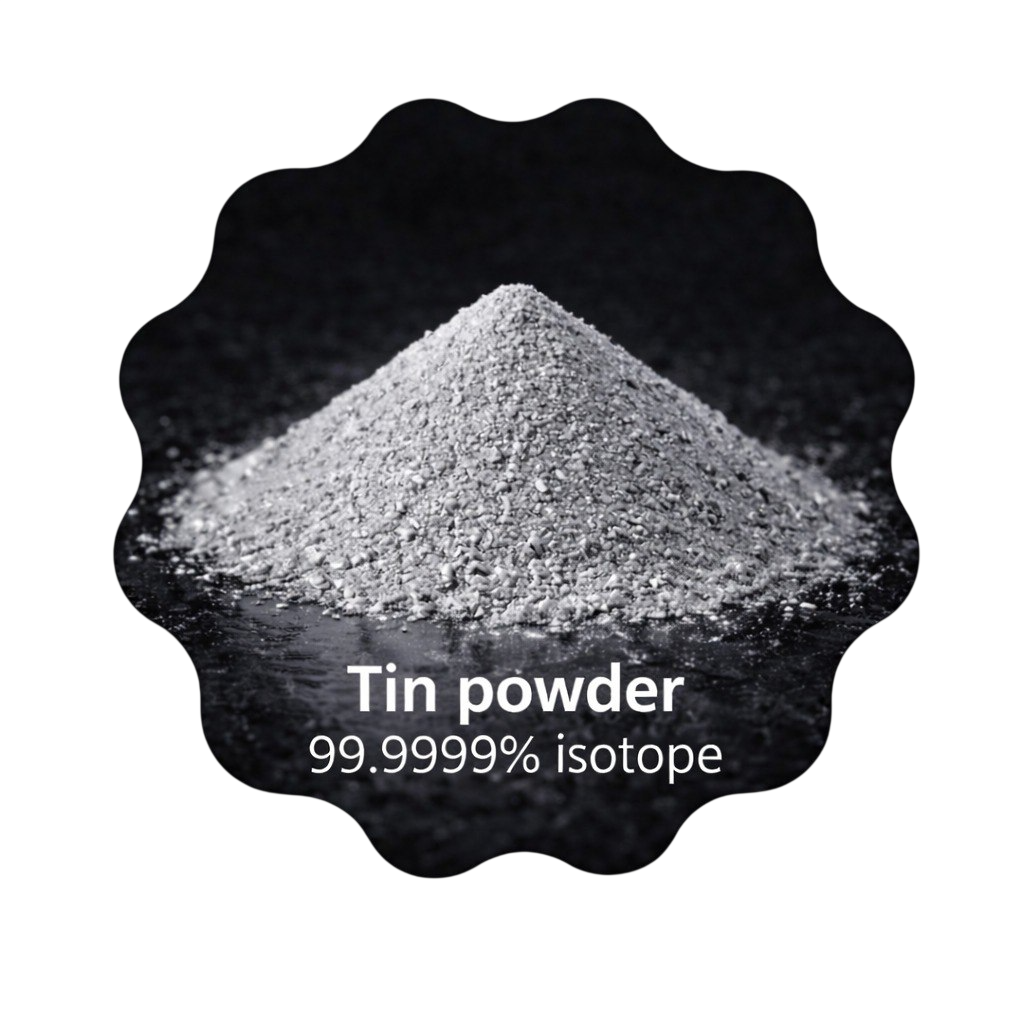
High-Purity Tin Powder (6N) – Extreme Purity (99.9999%)
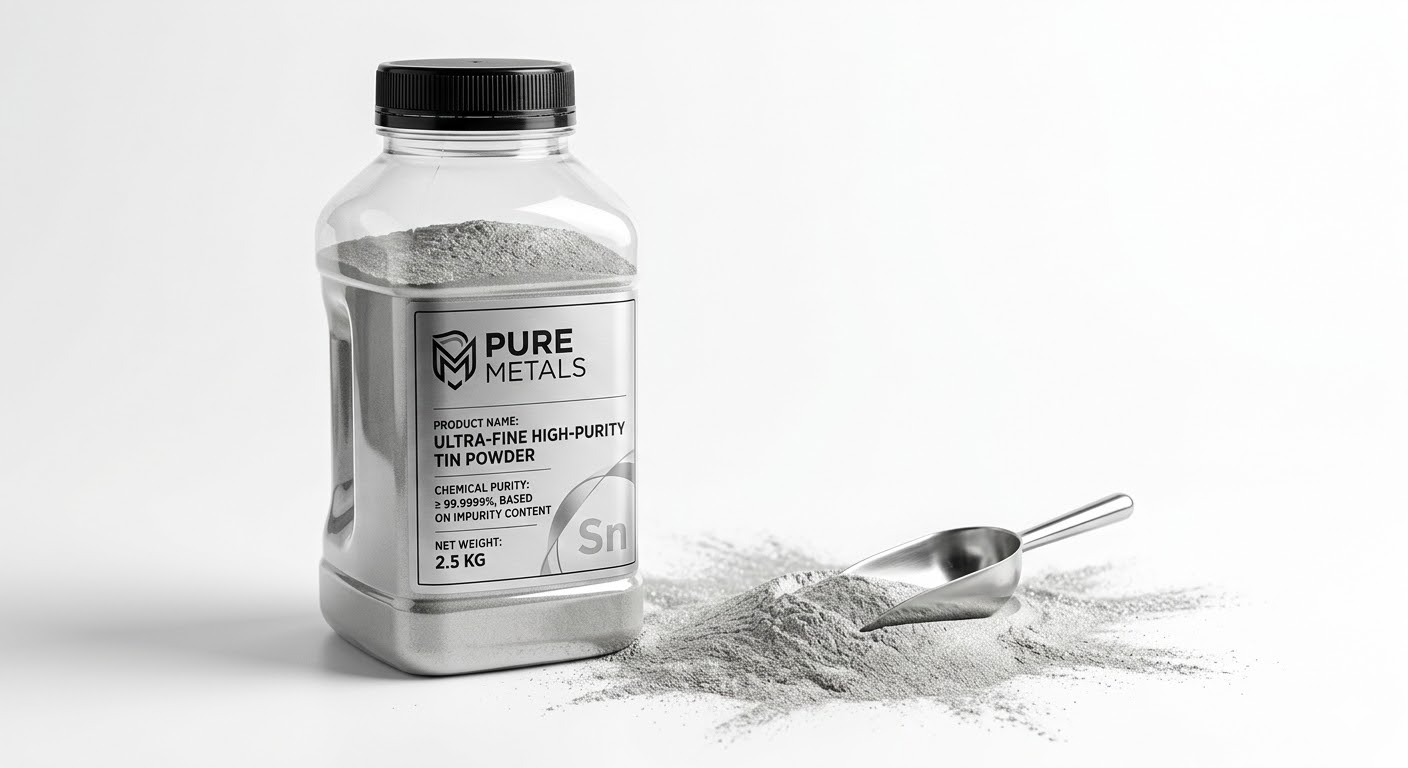
Containers of 85 kg; PET bottles of 2–2.5 kg
Product Gallery
Product Details
Real FAQs
Yes, trial orders are available for most products, excluding custom-engineered alloys. Please select the “Trial quantity required” option when submitting your RFQ form.
Lead times vary depending on the type of order. Below is an overview of typical processing and delivery times for our main order categories:
- Trial batch orders are typically dispatched within 5 business days from the date of payment receipt.
- Ultra high-purity metals purchase orders are fulfilled within 7–14 business days from the date of advance payment under the main agreement, depending on quantity and destination.
- Custom alloy wire manufacturing orders include a development phase and are scheduled individually based on product complexity, specification, and volume.
Lead time for each custom alloy wire contract is determined jointly with the client and includes both production and quality assurance stages.
Yes, we can arrange logistics and deliver to any international airport specified by the buyer.
Our order processing follows a structured and transparent workflow aligned with Incoterms 2020 practices:
- Client: submits an LOI (Letter of Intent) or RFQ form to Pure Metals.
- Jointly: we clarify and confirm all technical and commercial details of the LOI/RFQ.
- Pure Metals: issues an FCO (Full Corporate Offer). We intentionally skip SCO (Soft Corporate Offer) to streamline the process.
- Client: confirms the FCO and provides proof of funds (BCL or equivalent banking document).
- Optionally: a trial quantity shipment may be arranged under an accelerated procedure, based on a simplified standalone agreement. Upon receipt, the client confirms that the product quality meets the required specifications.
- Pure Metals: drafts the contract and coordinates revisions with the client.
- Both parties: sign the final contract.
- Client: makes a partial advance payment — typically 25% of the total value of the initial product batch.
- Pure Metals: dispatches the goods and provides the transport documentation to the client.
- Client: completes final payment and receives the goods at the destination in accordance with the transport documentation and agreed delivery terms.
Absolutely. Once your RFQ or LOI is agreed upon and the FCO is signed, we’d be happy to arrange a visit to one of our warehouses that best suits your order specifics. If needed, we can also organize self-pickup of your order from the warehouse under the appropriate Incoterms 2020, making the process as smooth and convenient for you as possible.
Yes, we assist with all necessary documentation to help streamline logistics, compliance, and customs clearance — regardless of the products combination or technical specifications in your order.
Yes, every delivery includes a lab certificate to verify product purity and ensure batch-to-batch consistency.
Other Products
Ultra High Purity Tin Powder: Material Profile
Tin is a silvery-white, malleable post-transition metal with an electron configuration of [Kr] 4d¹⁰ 5s² 5p². This configuration underlies its moderate chemical reactivity, excellent electrical conductivity, and the ability to form stable oxide passivation layers under ambient conditions. Tin has a melting point of 231.9°C, a boiling point of 2602°C, and a density of approximately 7.29 g/cm³. Notably, tin undergoes an allotropic transition below 13.2°C (“tin pest”), converting from the metallic β-phase (white tin) to the brittle α-phase (gray tin) — a critical consideration in cryogenic and long-term storage applications.
Among specialty materials, ultra-high purity tin is distinguished by its exceptional solderability, low toxicity relative to lead, and outstanding isotopic diversity — with 10 stable isotopes, the most of any element. These characteristics, combined with extreme purity levels, make high-purity tin powder indispensable in advanced electronics manufacturing (lead-free soldering, flip-chip interconnects), superconductor research, and precision thin-film deposition.
At elevated purity levels, material performance is acutely sensitive to trace contamination. Impurities such as bismuth (Bi), lead (Pb), antimony (Sb), or iron (Fe) at the ppb level can compromise solder joint reliability, disrupt crystal lattice integrity in semiconductor applications, or introduce undesirable intermetallic phases that degrade electrical and mechanical performance.
Product Form and Handling
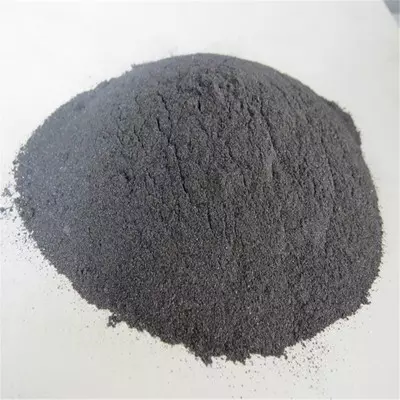
High-purity tin is supplied as a fine powder with a controlled particle size distribution (typically 10–75 µm) and a well-defined spheroidal morphology. Particles are produced via inert gas atomization or electrolytic synthesis under tightly controlled conditions, ensuring maximum structural homogeneity, low oxygen content (~1.1 wt.%), and consistent flowability across batches.
Due to the high surface-to-volume ratio of the powder, handling requirements are stringent. Each batch is hermetically sealed in double-layered polyethylene bags or vacuum-packed under an inert atmosphere (argon or nitrogen) to prevent oxidation, inhibit moisture adsorption, and preserve purity integrity during transit and storage. These measures ensure the material arrives uncontaminated and immediately ready for high-precision industrial and research applications.
Applications of Ultra High-Purity Tin Powder (6N)
Ultra-high-purity tin, defined by its extraordinary 99.9999% (6N) purity level, is a critical material for industries where the slightest atomic-level impurity can compromise performance. Its combination of exceptional solderability, outstanding electrical conductivity, and unique isotopic diversity — with 10 stable isotopes, the most of any element — makes it superior to lower-grade alternatives in high-tech environments. At this “six nines” level, tin is indispensable in: